





Plasmalogens have a complicated name, but finding them in nature isn’t complicated at all.
They are naturally present in our bodies and can also be found in some of the foods we eat.
The main dietary sources include seafood, meat and dairy products, with marine foods receiving particular attention in plasmalogen research.
So, what foods naturally contain plasmalogens? Let’s take a look.
Can You Get Plasmalogens from Food?
Yes.
Plasmalogens are naturally found in several animal-based foods because they form part of the membranes of animal cells.
You won’t normally find “plasmalogens” listed on a nutrition label, so you may already be eating them without knowing it.
The amount and type can vary from one food to another, but there are three main groups worth knowing about.
1. Seafood and Marine Foods
Seafood is one of the most interesting natural sources of plasmalogens.
Plasmalogens can be found in different types of seafood, including fish and shellfish such as scallops, mussels and oysters.
Shellfish have attracted particular interest in plasmalogen research, and scallops are one marine source that has been studied for their plasmalogen content.
Marine sources are also interesting because of the types of fats found within them. Their distinctive composition has attracted attention from researchers studying plasmalogens and nutrition.
This is also why you may increasingly come across the term “marine-sourced plasmalogens” in nutritional products.
2. Meat and Animal Foods
Plasmalogens are also naturally present in commonly eaten meats.
Examples include beef, pork and chicken, although the amount can vary depending on the animal and the particular tissue.
Some organ meats can also contain plasmalogens, which makes sense when we remember that these specialized lipids naturally form part of animal cell membranes.
There’s no need to start calculating the plasmalogen content of your dinner, though. The useful takeaway is much simpler:
Foods such as beef, pork and chicken can all contribute dietary plasmalogens as part of a normal diet.
3. Dairy Products
Dairy foods can provide plasmalogens too.
Milk is one example, as its natural fat contains a complex mixture of lipids and phospholipids.
Other dairy foods made from milk, such as cheese, cream and butter, can also contain milk-derived phospholipids, although their composition and amounts vary between products.
This means dairy can be another dietary source of plasmalogens, but the amount you consume will depend on the type of food and how it has been produced.
As with seafood and meat, there’s no need to seek out one particular dairy product simply because it contains plasmalogens. It’s better to think of these foods as different contributors within the wider diet.
Plasmalogen Food Sources at a Glance
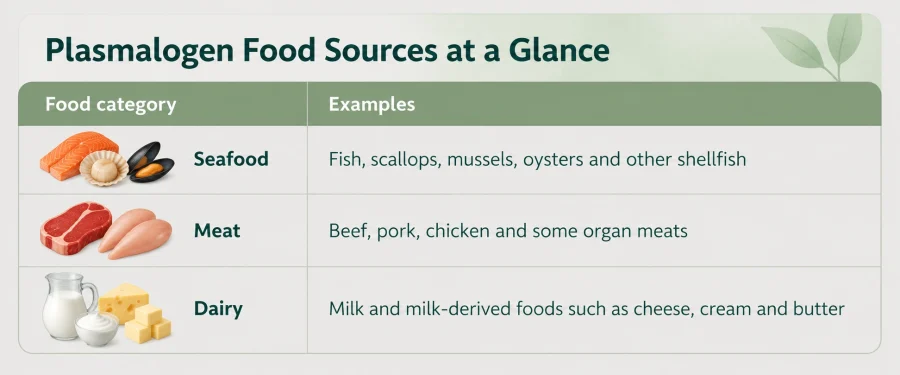
The exact amount and composition of plasmalogens can vary considerably between foods, so these examples should be viewed as dietary sources rather than a ranking of foods by plasmalogen content.
What About Plant-Based Foods?
This is where plasmalogens are a little different from many nutrients we regularly talk about.
Fruit, vegetables, grains, nuts and seeds provide an enormous variety of beneficial nutrients, but most plant foods aren’t significant dietary sources of plasmalogens.
Plasmalogens are primarily associated with animal tissues.
That doesn’t mean one type of diet is “better” than another. It simply shows why variety matters: different foods provide different things.
Why Are Marine Sources Getting So Much Attention?
If plasmalogens are present in meat and dairy too, why do we hear so much about marine-sourced plasmalogens?
The answer comes down to what they contain.
Not every plasmalogen is exactly the same. Their composition can vary depending on where they come from, and marine organisms have distinctive fatty-acid profiles.
That makes marine plasmalogens particularly interesting to researchers studying nutrition and the brain.
It is also one reason marine sources are increasingly being used in specialized plasmalogen supplements.
Can Our Bodies Make Plasmalogens?
Yes, and this is an important part of the story.
We don’t depend entirely on food for plasmalogens. Our bodies can produce them too.
They are naturally found throughout the body and are particularly abundant in areas such as the brain, heart and nervous system.
Researchers are still learning more about how our production and levels of plasmalogens change throughout life.
This has helped create growing interest in plasmalogens as part of the wider conversation around brain nutrition and healthy aging.
Food or Supplements?
If plasmalogens are already present in food, you might reasonably ask:
Why would anyone take a plasmalogen supplement?
The main difference is consistency.
When you eat seafood, meat or dairy, the amount and type of plasmalogens you consume can vary considerably.
A specialized supplement can provide a specific source in a consistent daily amount.
That doesn’t make supplements a replacement for a healthy diet. They’re simply another option for people who are specifically interested in incorporating plasmalogens into their nutritional routine.
What Should You Look for in a Plasmalogen Supplement?
If you’re considering a supplement, don’t stop at the word “plasmalogen” on the label.
Three simple questions can help:
Where does it come from?
Different sources can provide different types of plasmalogens.
How much does it provide?
Look for clear information about the amount contained in the product.
How is the product made and tested?
Quality and manufacturing standards matter when choosing any nutritional supplement.
A little information can make it much easier to understand what you’re actually buying.
Interested in Marine-Sourced Plasmalogens?
For people interested in adding marine-sourced plasmalogens to their nutritional routine, Sun Neuro provides a simple and convenient option.
It allows you to incorporate a consistent source of plasmalogens into your daily routine without having to plan your meals around specific food sources.
As always, supplementation should complement a balanced diet and healthy lifestyle rather than replace them.
Final Thoughts
So, where can you naturally find plasmalogens?
The simple answer is:
Seafood, meat and dairy products are the main dietary sources, while most plant foods aren’t significant sources.
Examples include fish, scallops and other shellfish, beef, pork, chicken, milk and other dairy products.
Among these, marine sources have attracted particular interest because of their distinctive lipid composition.
Our bodies can also produce plasmalogens naturally, which means food is only one part of a much bigger picture.
You certainly don’t need to start counting plasmalogens at every meal. But understanding where they come from makes this unfamiliar nutrient much easier to understand and helps explain why marine-sourced plasmalogens are attracting growing interest in nutrition.
Disclaimer: This article is for informational purposes only and is not intended to diagnose, treat, cure, or prevent any disease. If you have concerns about your health or are considering dietary supplements, please consult a qualified healthcare professional.